
Notice: The conferences shown below have been fully managed and supervised by Dr. Kamal Emam, the current Chairman of the Board of Directors of CTQ company during the period from August 2009 till August 2020 in which he took over the presidency of the Board of Directors of the International Center for Training and Quality Services.
Dr. Marwa Farouk, the Managing Director of CTQ company has also managed all the logistics and supervised the conference team during the implementation of these conferences, during her period of work at the International Center for Training and Quality Services as Director of Training Department and then as the Managing Director of the Center until August 2020.
The First International Conference and Exhibition for Developing Technical Education and Training
Edu-TechCairo’15
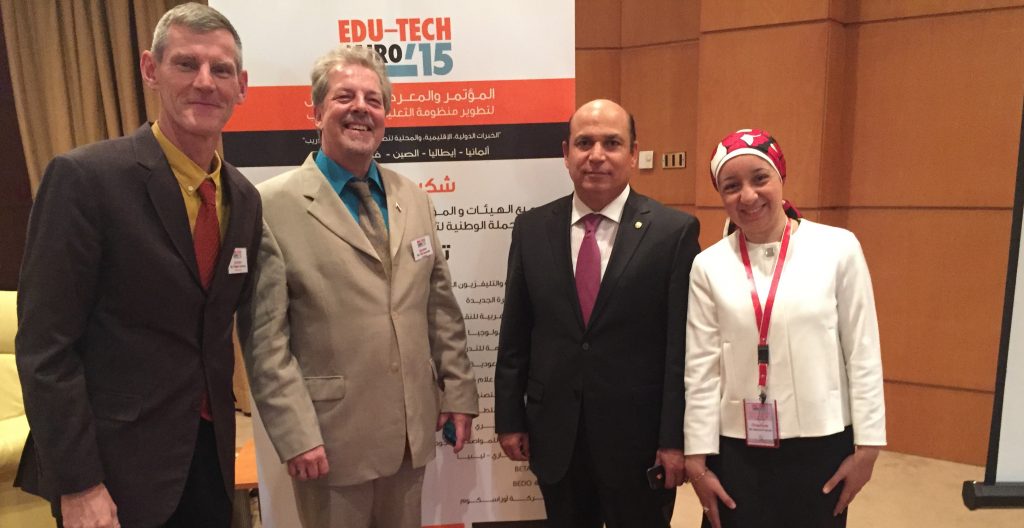
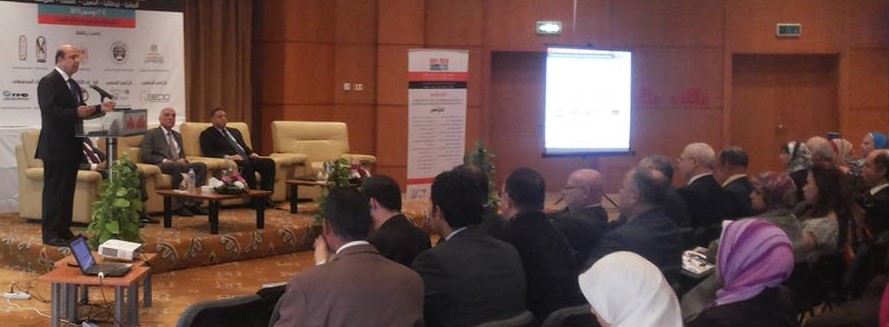
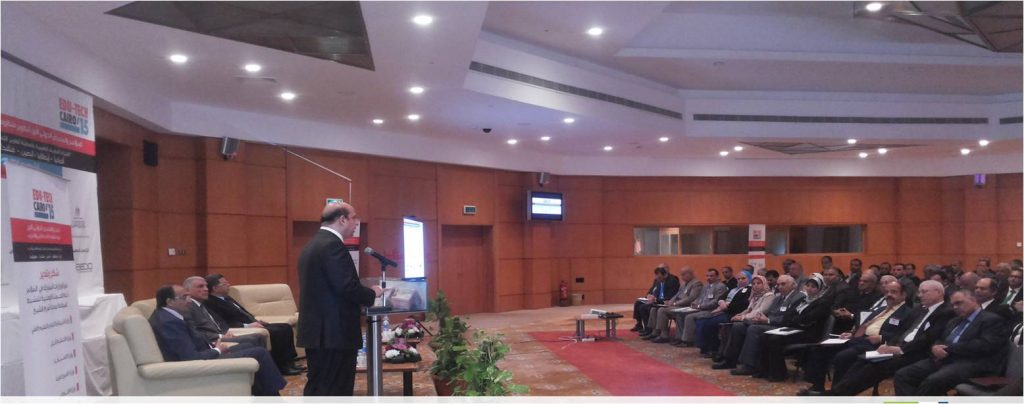
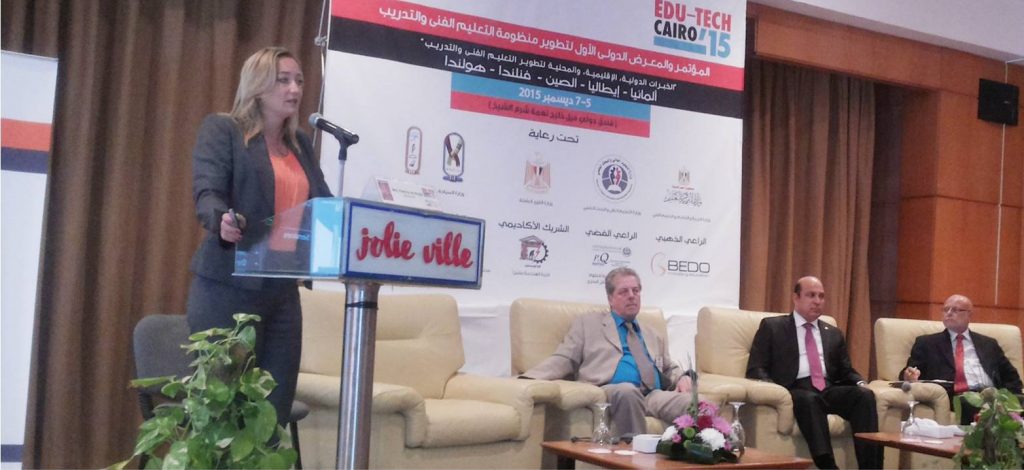
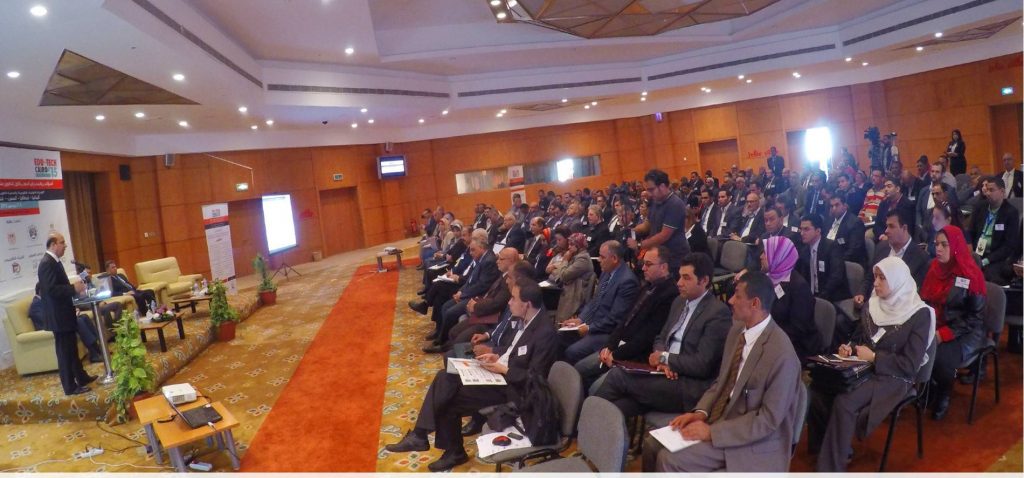
“International, Regional and Local Experiences in Developing Technical Education and Training”
5-7 December, 2015
Venue: Jolie Ville, Sharm ElSheikh
Conference Objectives
- Qualifying technical cadres in various fields (Industrial-Agricultural- Healthcare-Tourism-Business-Security)
- Expanding partnership between all sectors of the community and its institutions (Governmental and Private, civil society) in order to connect the output of technical education and training with the labor market needs.
- Achieving vertical integration between technical education and vocational training systems.
- Developing technical and vocational education curricula and student assessment systems.
- Benefiting from leading international experiences in technical education and vocational training development (China, Finland, Germany, Italy, and Korea).
- Dissemination of quality culture and in technical education thus contributing to the development of Egyptian cadres.
- Shedding the light on Egyptian and Arab successful experiences in qualifying technical education and vocational training workforce.
- Dissemination of a culture of entrepreneurship and developing necessary skills to support small projects.
- Raising awareness about the necessity of a more appreciative and civilized overview to vocational workers.
- Professional and specialized development of technical education teachers and trainers.
- Activating the role of modern technology in developing technical and vocational education.
- Effective participation in developing technical and vocational education in Egypt.
Conference Outlines
1- Reviewing international, regional and local experiences
- Reviewing models and outcomes of the Chinese experience
- Reviewing models and outcomes of the Finnish experience
- Reviewing models and outcomes of the German experience
- Reviewing models and outcomes of the Italian experience
- Reviewing models and outcomes of the Korean experience
- Reviewing models and outcomes of the Singapore experience
- Reviewing models and outcomes of the Arab Region (Saudi Arabia, UAE, Kuwait, etc.) experiences
- Reviewing models and outcomes of Egyptian institutions and Organizations
- Governance in technical education and training
- Providing a proposed model for technical education and training in Egypt in light of learned experiences from international and regional experiences.
2- Partnership with different sectors to provide advanced patterns of technical education
- The role of Ministry of Technical Education and Vocational Training
- The role of Ministry of Manpower and Immigration
- The role of Ministries of Health, Industry, Tourism, Agriculture, and Environment.
- The role of armed forces in the development of technical and vocational education
- The Ministry of Interior Affairs role in educating prisoners in technical professions
- Partnership with private sector offering leading experiments.
- The role of non-governmental organizations in providing initiatives to develop technical and vocational education.
3- Different mechanisms to develop the technical and vocational education curricula
- DACUM Mechanism
- Functions Map mechanism
- Integrating new specialties in technical education
- Communicate with the leading international owners in the field of technical and vocational education experiences (China, Finland, Germany, Italy, and Korea).
- Mechanism of participation of Business corporations and institutions as an essential stakeholder.
- Linking technical and vocational education outcomes
- Communicate with the graduates by providing them with a survey to help the curriculum development mechanism
- The involvement of experts and university professors in practical and theoretical curricula development
- Quality assurance of technical education and vocational training
- Communicate with the centers and Arab expertise in the field of technical and vocational education
- Mechanism of activating vocational training for students and teachers in technical education
4- Integration in Technical Education and Vocational Training
(vertical gradient in the system)
- Cooperation between Ministries of Education and Technical Education and Vocational Training.
- Basic education integration (in coordination with Ministry of Education)
- Career guidance and counseling in Technical education and training
- Description and evaluation of secondary technical and vocational education
- Communication with the Ministry of Higher Education and coordination regarding related institutions and faculties.
- Suggesting new mechanisms to encourage youth to enter technical education and vocational training systems
- Activating different programs for technical education and training (e.g. Education and training Dual System, etc.)
- Current Student Assessment Systems in technical and vocational education
- Ideal standards in theoretical and practical Student Assessment Systems
- Theoretical and practical exam specifications and testing standards in technical and vocational education
- Display models of the international experiences in student assessment and examinations in technical and vocational education systems.
- Developing teachers’ skills in student assessment and the development of appropriate tests.
6- The media’s role in raising the technical and vocational education importance.
- The media’s role in addressing the inferior outlook towards technical workers
- The role of media in creating positive collective society awareness towards the importance of technical and vocational labor and its role in the national economy.
- Presenting successful models of Arab and Egyptian technical workers.
Recommendations:
- Establishing a database for all technical education and vocational training (TVET) centers in Egypt.
- Establishing a database of labor market needs for graduates of (TVET).
- Holding a conference on the reality of (TVET) in all governorates of Egypt (27 governorates) to determine the relative advantages of each governorate, and its actual needs from graduates of (TVET).
- Work to create an integrative system of all the major parties involved in (TVET) (the idea of establishing a technical education union in each governorate).
- Continuous communication with some members of Parliament who have the vision to come up with legislations that serve (TVET) in line with the text of Article 20 of the Constitution.
- Partnering with the audio-visual media and newspapers and encouraging them to play their national role in promoting the idea of (TVET).
- Maximizing and activating the role of the private sector and civil society to maximize social responsibility for community development (such as: The Industrialization Authority, which offered a number of grants to train technical education graduates and the offer submitted by the Chamber of Engineering Industries, which offered 200 training grants to technical education graduates in North and South Sinai in addition to 100 scholarships for training disabled persons in South and North Sinai governorates.
- Involving the private sector and civil society in designing programs and curricula for (TVET).
- Work on preparing a practical guide for professional crafts explaining the different levels of performance.
- The creation of new specializations in technical education programs and decisions appropriate to the needs of major national projects such as the Suez Canal development hub and the Dabaa nuclear project.
- Review and develop technical education curricula in the various disciplines to cope with technological development and the needs of the labor market.
- Setting and adopting the National Qualifications Standards (NQS).
- Activating the role of the Supreme Council for Human Resources Development.
- The necessity of issuing a law for TVET that regulates procedures and relationships and specifies educational tracks and national qualifications to work with in the local, regional and international labor market.
Speakers List
- Feidler Henning (Germany)
International Business Consultant
- Markus Gaugler (Germany)
Project Manager, Discovering Natural Latent Abilities, DNLA GmbH
- Patricia de Bruijn (Holland):
Cadena IDP, TVET International Consultant
- Enzo Sciolla (Italy):
International Technical and Educational Consultant
- Olli Saramaki (Finland):
Vocational School Principal
- Pasi Raikisto (Finland):
CEO Management Systems, OY
- Jan-Eric Danielsson (Finland):
CEO, Intelligent HR Systems
- Lixingzhi (China):
Director of foreign affairs office, Beijing Information Technology College
- Y Xin (China)
Dean of mechanic engineering department, Beijing Information Technology College.
EVENT INFO :
- Start Date:December 5, 2015
- End Date:December 7, 2015